
MORE ABOUT GIA
Geothermal Impact Alliance (GIA) partners with developers, government agencies, and institutions to advance world class geothermal systems. We are a non-profit organization dedicated to advancing the implementation and use of geothermal energy for sustainable heating and cooling.
We focus on the development of commercial-scale, closed-loop geothermal systems that provide efficient, district-level heating and cooling solutions. We engage specialist capabilities in geothermal system design and operations, public infrastructure, real estate development, and financing to advance utility-scale geothermal systems that are energy-efficient, cost-effective and implementable across all communities in the United States.

Schematic of district-scale geothermal heating/cooling system; Source: Eversource Energy
focus on thermal grid
What is a Thermal Grid?
GIA focuses on a district-scale geothermal-exchange systems—“Thermal Grids”—that take advantage of efficiencies and economies of scale to heat and cool all buildings in mid- to large-scale developments.
The Thermal Grid is a district-scale heating and cooling system that circulates tapwater-temperature water through a network of closed-looped distribution pipes. The piped closed-loop water “powers” heat exchange pumps (ground source heat pumps) inside buildings.
How do Geo-exchange Heat Pumps Work?
About ten feet below the surface, the earth maintains year-round temperatures of approximately 55°F. To heat and cool buildings, geothermal heat pumps inside buildings circulate water through pipes buried underground.
In HEATING MODE, these systems pull heat from the ground (Thermal Grid) to warm buildings. In COOLING MODE, they pull heat from buildings and push it back into the ground (Thermal Grid) to cool buildings.
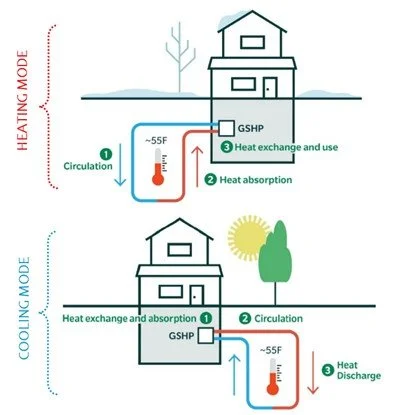
Image source: Eversource Energy
GIA Evaluates Geothermal Feasibility for The Point
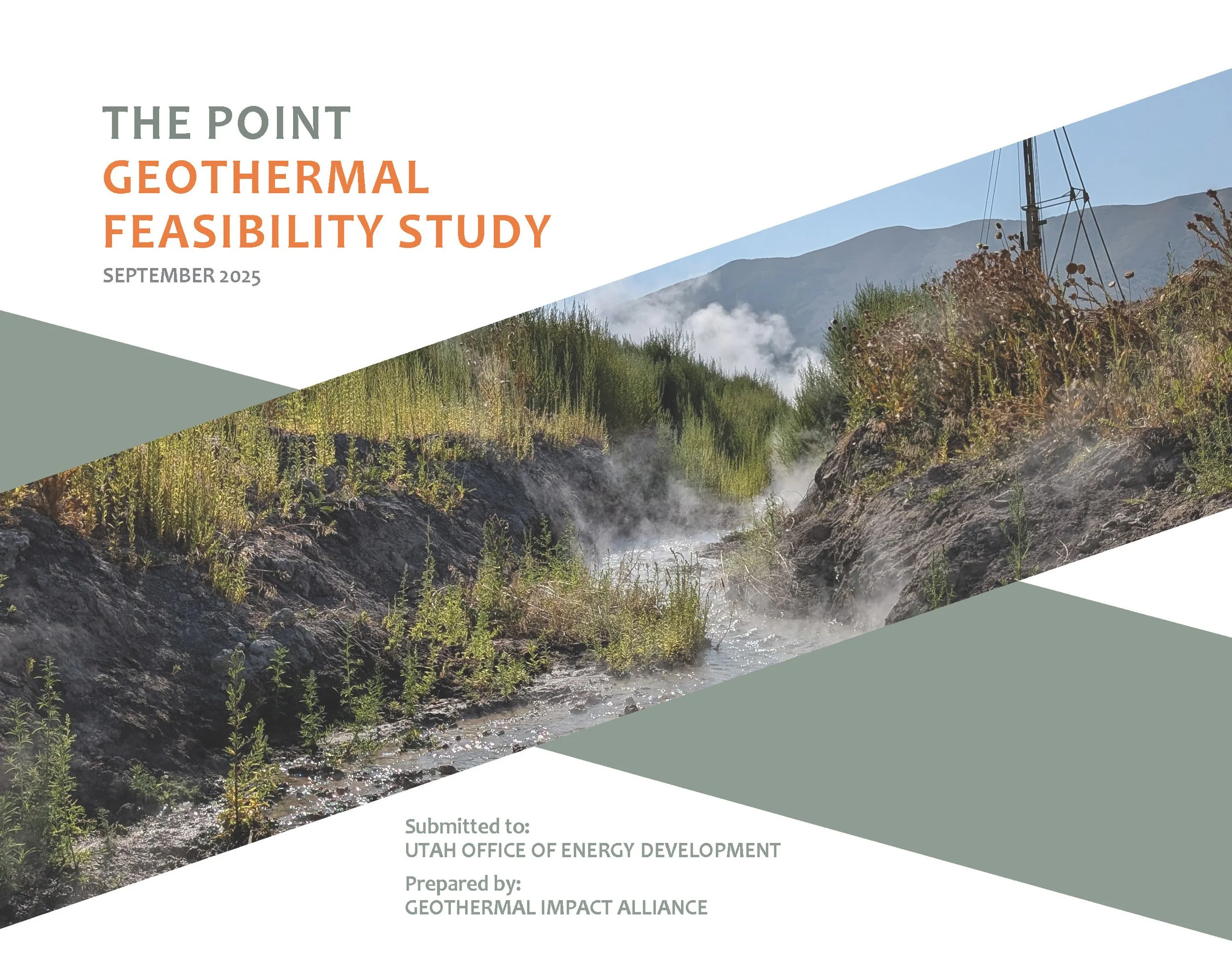
GIA evaluated the feasibility of implementing a district-scale geothermal-exchange system to heat and cool future buildings at the Utah State Point of The Mountain’s 600-acre redevelopment site in Draper, Utah. The geothermal feasibility study was commissioned by the Utah Office of Energy Development (OED) in close collaboration with the Point of the Mountain State Land Authority (POMSLA). The feasibility study considered a district-scale ambient temperature loop system, which includes a system of geothermal exchange pipes (ground loops) that tap the constant temperature of the earth as well as locally available geothermal resources, such as Crystal Hot Springs located on-site at The Point. The study defined conceptual district-scale geothermal systems to assess the feasibility of implementing a geothermal-exchange system to heat and cool future buildings at The Point, including the full build-out of 19 million square feet and partial/phased implementation of a stem to serve approximately one to six million square feet for the first phase of development. The system considered a variety of heating and cooling assets, including conventional boilers/chillers, geothermal water, and borefields of closed-loop vertical boreholes. The feasibility assessment was based on estimates of capital and operational expenditures and energy and utility cost savings and defined financing tools to implement the geothermal system. Link to the feasibility study summary report.